
From smart orders
to physical action
Restaurant AI becomes tangible through cooking equipment, ordering interfaces, beverage systems and the software connecting them.
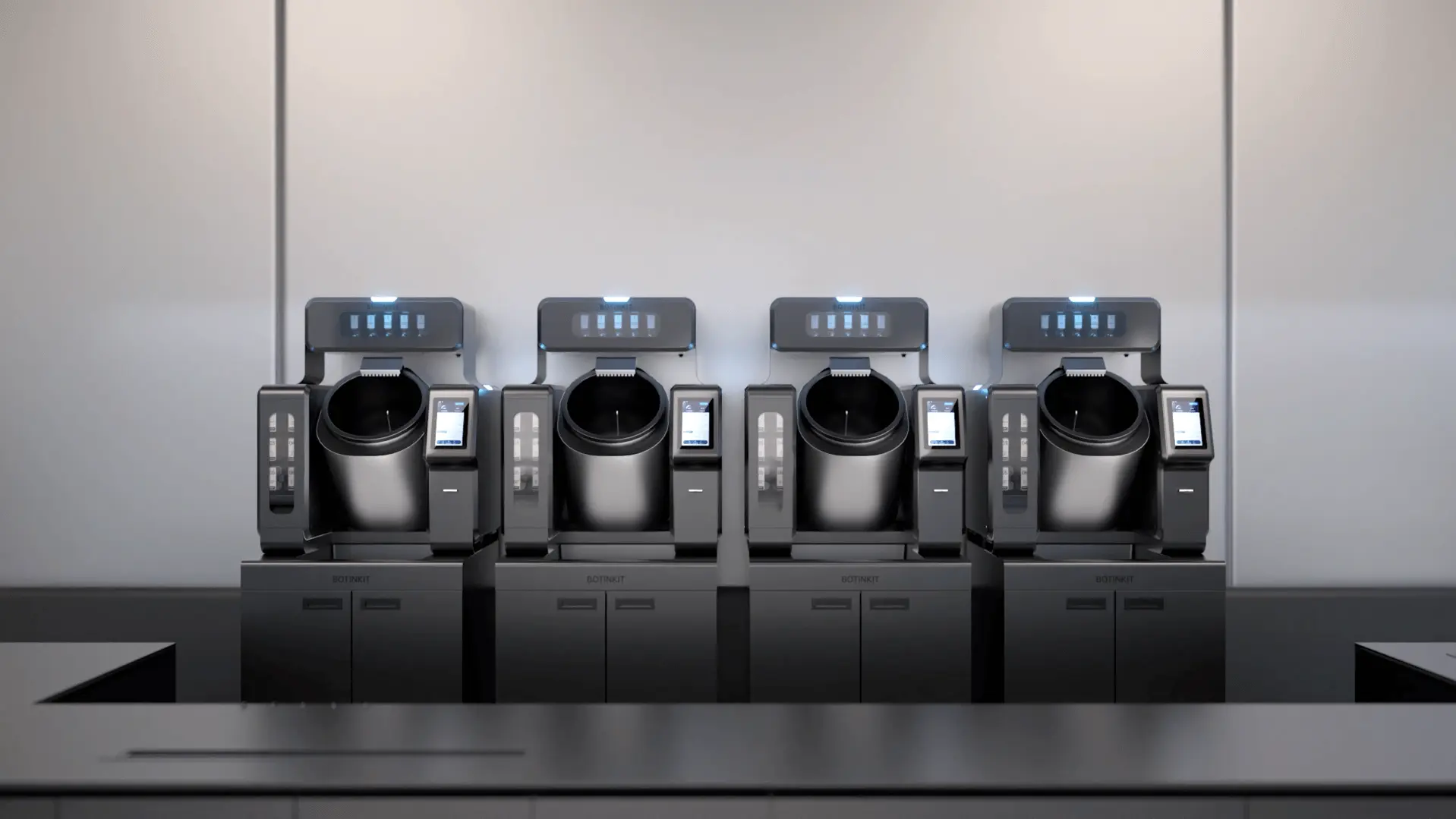
Robotic cooking
Recipes become controlled heat, movement and timing.
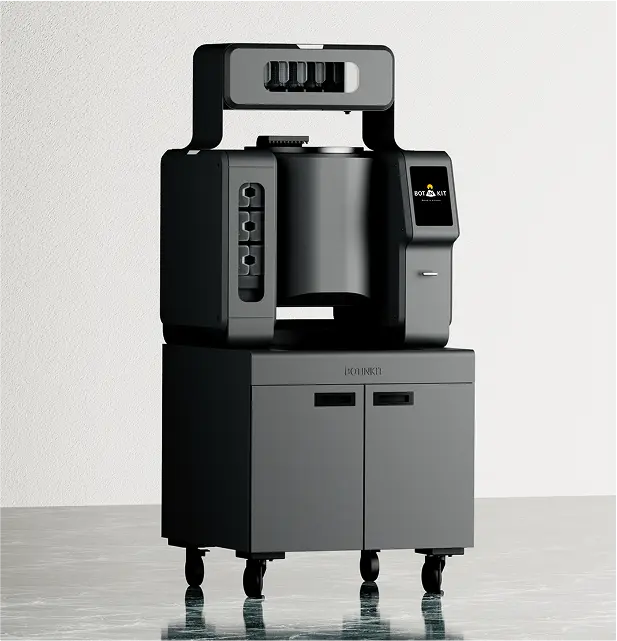
Automated woks, cooking stations and food-preparation robots connect a recipe to physical equipment. Evaluation starts with what your menu and team actually need.
A scenario to explore
A lunch kitchen uses an automated wok for a repeatable dish while a cook handles preparation, checks the result and finishes the plate.
What to evaluate
- Menu fit
- Portion size, ingredients, texture and batch consistency.
- Kitchen fit
- Space, extraction, utilities, cleaning and food-contact requirements.
- People & service
- Training, supervision, maintenance and a workable fallback.
AI-assisted ordering
A better connection between the guest, the menu and the kitchen.
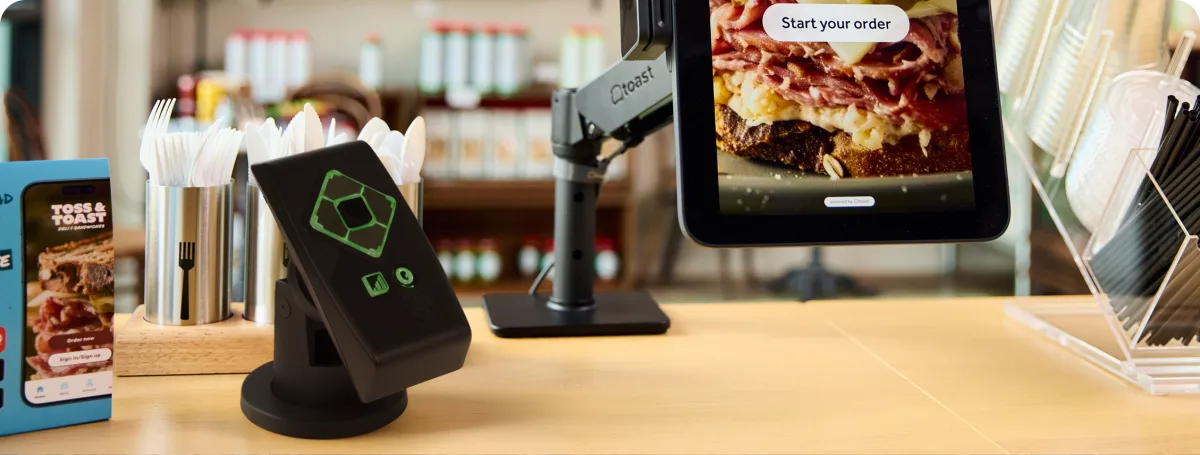
Explore voice ordering, menu search and order assistance connected to POS and kitchen workflows. Accuracy and a clear route to a person matter as much as convenience.
A scenario to explore
A guest describes what they want. An assistant works from the restaurant’s approved menu, confirms options and passes a checked order into the existing system.
What to evaluate
- Menu accuracy
- Current items, prices, modifiers and availability.
- Guest experience
- Clear confirmation, accessible controls and staff assistance.
- Integration
- Order routing, data permissions and recovery from mistakes.
The pictured Toast terminal illustrates self-ordering hardware. AI functionality depends on the software and configuration; a touchscreen alone does not establish AI capability.
Automated coffee
& beverages
From bean-to-cup equipment to a robotic barista.
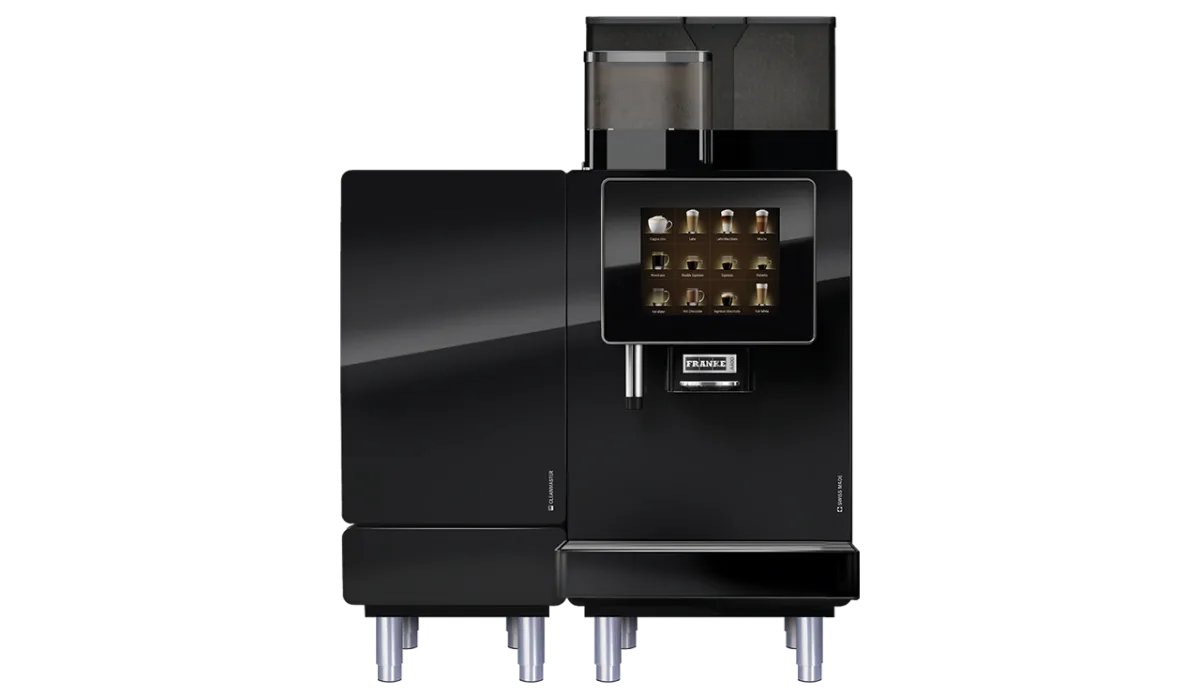
Look at preparation, dispensing, order handoff and the work between drinks. A compelling demonstration is only one part of a dependable beverage operation.
A scenario to explore
A café combines automated beverage preparation with staff-led replenishment, cleaning, quality checks and guest service during the morning rush.
What to evaluate
- Drink workflow
- Recipe control, milk handling, replenishment and handoff.
- Operating reality
- Peak demand, cleaning time, uptime and local service.
- Human supervision
- Quality checks and a clear response when equipment needs help.
A connected
restaurant operation
A useful system links the order, the preparation task, the equipment and the people responsible for the result.
- SenseRead an order or observe a task.
- DecideChoose the next appropriate action.
- ActCook, move or dispense.
- CheckReview the result with human oversight.
Software & data
POS connections, inventory, demand planning and clear permissions for the information each tool needs.
Robotics & automation
Cooking, dispensing, handling and service equipment that can work within a real restaurant layout.
People & accountability
Training, safety procedures, quality checks and practical alternatives when a system is unavailable.
These are areas for exploration, not claims about AACA deployments or programs. Automation and AI are distinct: the capabilities of an individual product should be checked with its manufacturer.
Equipment is shown as an industry example, with no affiliation or endorsement implied. Image sources.
Evaluate the workflow
Then evaluate the tool
Start with a real task, test it in context and understand what it takes to operate it.
Read our approach